
AVANT-GARDE DOG WEAR: MANIFESTO IN THE AGE OF CHAOS
- Dec 15, 2025
- 5 min read
Updated: Jan 15
THE DOG WEAR AS A PHILOSOPHICAL MANIFESTO: THE DIALECTIC OF FORMAL ORDER AND INTERNAL CHAOS
THE FUNDAMENTAL PHILOSOPHICAL CONTRADICTION
THERE EXISTS A CONCEPT THAT CLEARLY DEFINES ITSELF BY MOVING BEYOND CONTEMPORARY ART TRENDS—IT IS FREE FROM SURREALISM, THE DISPROPORTIONALITY OF ABSTRACT FORMS, AND THE ALMOST PAINFUL QUEST FOR IDENTITY. THE MAIN GOAL IS TO CONVEY A PHILOSOPHICAL MESSAGE THROUGH THE INTENTIONAL USE OF FORM AND PROPORTION.
THE DOG—AS "BEST FRIEND"—REPRESENTS ONE OF THE STRONGEST EMOTIONAL BONDS A HUMAN CAN EXPERIENCE. TAKING THIS RELATIONSHIP SERIOUSLY SIGNIFIES A PARADIGM SHIFT.
THIS PERSPECTIVE DOES NOT STOP AT THE DOG. IT PROCLAIMS: ANIMALS ARE NOT TOOLS OR SUBORDINATE BEINGS, BUT PARTNERS. THUS, THE CONCEPT OF BESTFREND ( DOG CLOTHING BRAND) BECOMES A STATEMENT.
WHEN DOG WEAR DOES NOT CONFORM, BUT COMMANDS PRESENCE
GENERALLY, MOST DOG APPAREL TENDS TO CONFORM: IT IS SMALL, CUTE, AND INCONSPICUOUS.
THE AVANT-GARDE APPROACH ASSERTS THAT THE DOG IS NOT AN ACCESSORY, BUT A GUIDE TO A NOBLER WORLD—A PATH THAT REQUIRES EFFORT, AS THE CURRENT SPIRITUAL AND MENTAL STATE OF HUMANITY IS TROUBLED.
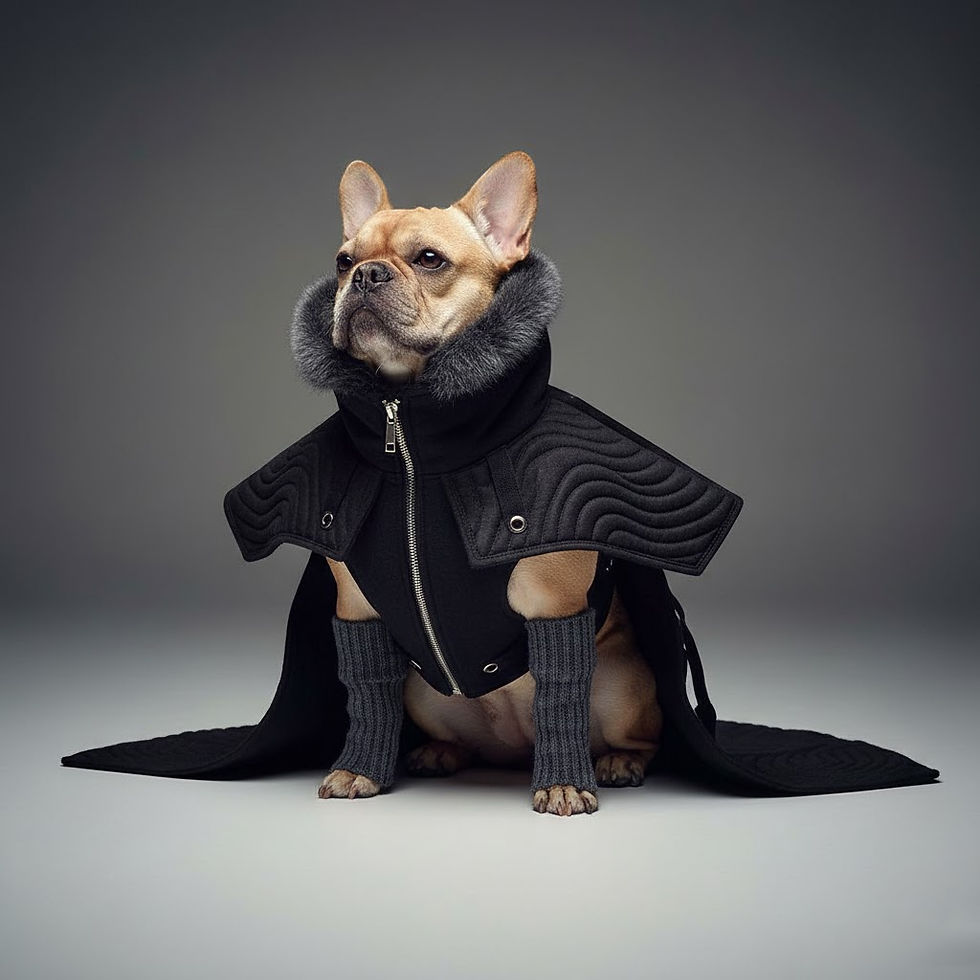
A ROBUST HOOD, A DETERMINED LINE OF THE BACK, OR AN ARCHITECTURAL CUT IS NOT A "COSTUME," BUT AN IDENTITY. IT IS AKIN TO A CONCEPTUAL FASHION SHOW PIECE: STRONG AT FIRST GLANCE, BUT ON SECOND LOOK, STRUCTURED, THOUGHTFUL, AND RESOLUTE. IT IS AWARE OF ITS STATUS AND HUMAN-ALIGNED QUALITIES, KNOWING IT IS DESTINED FOR MORE, AND ITS CAPABILITIES MUST BE USED RESPONSIBLY IN THIS WORLD. THIS IS THE PATH THE HUMAN WILL FOLLOW TOWARD A NEW WORLD, WITH THE DOG AS A SPIRITUAL LEADER, INSTILLING NEW FAITH IN HUMANITY, A PARTNER IN THE AGE OF REALIZATION.
HERE, FORM CONVEYS THOUGHT, NOT CUTENESS
AVANT-GARDE DOG WEAR DOES NOT STRIVE TO MAKE THE DOG "CUTER." THESE PIECES WORK WITH STRUCTURE, MASS, AND PROPORTION—USING THE SAME TOOLKIT AS HUMAN AVANT-GARDE FASHION OR ARCHITECTURE.
THE ROBUST FORMS, THE SCULPTURAL LINES, AND THE ALMOST COSTUME-LIKE APPEARANCE ALL CONVEY THIS MESSAGE: THE DOG IS NOT AN ACCESSORY, BUT THE REBOOT MECHANISM FOR OUR LOST SOUL.
AVANT-GARDE DOG WEAR AS A WORLDVIEW
THIS APPROACH IS NOT FOR EVERYONE, AND THAT IS PRECISELY WHAT MAKES IT AUTHENTIC. THE AVANT-GARDE DOG WEAR REPRESENTS A WORLD WHERE THE HUMAN-ANIMAL RELATIONSHIP IS NOT HIERARCHICAL, BUT SYNERGISTIC. BECAUSE WHEN WE LOOK AT ANIMALS DIFFERENTLY, WE START TO THINK ABOUT THE WORLD DIFFERENTLY. WHAT DOES THIS MEAN FOR DOG WEAR?
THE ALLIANCE BETWEEN DOG AND HUMAN SPANS MILLENNIA. EVEN IN ANCIENT CIVILIZATIONS, THE DOG WAS HELD IN SPECIAL REVERENCE—CONSIDER EGYPTIAN MYTHOLOGY, WHERE THE JACKAL-HEADED ANUBIS—THE GOD OF DEATH AND THE AFTERLIFE—SYMBOLIZED LOYALTY AND THE PATH. THIS SPIRITUAL BOND HAS DEEPENED OVER TIME, RISING TO A NEW PHILOSOPHICAL LEVEL.
FOR MODERN HUMANS, THE DOG IS NOT JUST A COMPANION, BUT A GATEWAY TO OUR LOST, AUTHENTIC SELF. LET US EXAMINE HOW THE DESIRED HUMAN SPIRIT IS REFLECTED IN THE DOG, AND HOW APPAREL GAINS NEW MEANING IN THIS ALLIANCE.
THE DOG AS A MIRROR: THE SUPPRESSED HUMAN SELF
THE PREVAILING EGO IN THE HUMAN WORLD OFTEN OBSTRUCTS SELF-REALIZATION. THE HIERARCHIES, WARS, FAMILY DISPUTES, AND CONFLICTS BETWEEN NATIONS CREATED BY THE EGO FORCE THE INDIVIDUAL AND SOCIETY INTO A CYCLE OF SELF-DESTRUCTION. THE PREVAILING EGO IN THE HUMAN WORLD OFTEN OBSTRUCTS SELF-REALIZATION. THE HIERARCHIES, WARS, FAMILY DISPUTES, AND CONFLICTS BETWEEN NATIONS CREATED BY THE EGO FORCE THE INDIVIDUAL INTO A CYCLE OF SELF-DESTRUCTION.
DOG WEAR AS IDENTITY: THE EMBODIMENT OF THE BOND
WHEN THE SUBJECT OF DOG WEAR ARISES, MANY IMMEDIATELY THINK OF FASHION. YET, APPAREL, IN THIS PHILOSOPHICAL CONTEXT, SIGNIFIES FAR MORE: THE EMBODIMENT OF THE NEW PHILOSOPHY: THE CHOICE OF DOG WEAR SPEAKS TO THE EXPRESSION OF IDENTITY AND UNIQUENESS, STRENGTHENING THE ALLIANCE WE HAVE FORGED WITH THE WORLD AND OURSELVES THROUGH OUR DOG.
THE DOG AS A GUIDING FORCE AND ATTRACTION
THE DOG—THE MIRROR OF THE HUMAN SOUL—BRINGS A NEW PHILOSOPHY AND ATTRACTIVE FORCE INTO OUR LIVES. THIS PURE CONNECTION IS AN ABSOLUTE AID IN ABANDONING SELF-DESTRUCTIVE PATTERNS AND CREATING A NEW WORLD FOR OURSELVES. THE CARE SHOWN FOR OUR ANIMAL COMPANION, SYMBOLIZED BY THE APPAREL, STRENGTHENS THE ALLIANCE: THEY ARE THE GUIDES WHO LEAD US BACK TO HUMANITY.

COSTUME OR DESIGN? THE BOUNDARY IS INTENTIONALLY BLURRED
AVANT-GARDE FASHION HAS ALWAYS BEEN CLOSE TO COSTUMING—AND THIS IS NOT A FLAW, BUT INTENTION. THE STRONG STRUCTURES, EXAGGERATED PROPORTIONS, AND ALMOST SCULPTURAL FORMS EXIST TO PROVOKE AN EMOTIONAL REACTION.
THE SAME THINKING APPEARS IN MODERN AVANT-GARDE DOG WEAR. THESE PIECES ARE NOT MADE FOR EVERY OCCASION, BUT TO REPRESENT A WORLD. A WORLD WHERE THE DOG IS NOT MERELY "DRESSED UP," BUT PART OF THE EMOTIONAL AND PHILOSOPHICAL NARRATIVE.
THE CORE MESSAGE:
THERE IS A FUNDAMENTAL TENSION BETWEEN THE REALITY OF LIFE'S DESTRUCTION AND THE ETERNAL AESTHETICS OF AFFIRMATION OF LIFE. THIS TENSION IS CARRIED BY TWO SEEMINGLY OPPOSING VISUAL LANGUAGES:
THE EXPRESSION OF DESTRUCTION (AVANT-GARDE / ANTITHESIS): THE VISUAL MANIFESTATION OF DESTRUCTIVE FORCES PRESENT IN LIFE, THE DISTORTED AND DISPROPORTIONATE PROCESSES.
THE EXPRESSION OF AFFIRMATION OF LIFE (GOLDEN RATIO / THESIS): THE APPLICATION OF THE GEOMETRIC IDEAL OF ETERNAL BEAUTY, HARMONY, AND CONSTRUCTIVE CREATION.
THE VISUAL LANGUAGE: AVANT-GARDE, BLACK, AND THE SCULPTURE OF CHAOS
CHARACTERISTICS OF DESTRUCTIVE AESTHETICS:
MONOCHROME (BLACK) AND POWERFUL CONTRAST: BLACK IS NOT JUST A COLOR, BUT WEIGHT, DRAMA, AND SERIOUSNESS. IT REINFORCES THE SCULPTURAL, DECISIVE FORMS.
APPAREL AS ARMOR OR SCULPTURE: THE DESIGNS ARE INTENTIONALLY POWERFUL AND MASCULINE IN EFFECT.
EXAGGERATED SHOULDER LINES: INTENTIONAL DISTORTION OF PROPORTIONS, EVOKING A SENSE OF INVULNERABILITY, BURDEN, OR THREAT.
SHARPNESS, SPIKES: SYMBOLS OF AGGRESSION TOWARD THE ENVIRONMENT, DEFENSE, OR DETERRENCE.
REFERENCE TO RICK OWENS' AESTHETICS (ANTITHESIS): (DISTORTED PROPORTIONS, SLUMPED POSTURE, SOAKED APPEARANCE, MASKED MAKEUP) SYMBOLIZE THE USE OF FASHION AS A CRITICAL TOOL. THIS VISUAL LANGUAGE DOES NOT PRAISE LIFE BUT REFLECTS ITS DISTORTIONS, EXHAUSTION, AND UNNECESSARY STRUGGLES.
THE GOLDEN RATIO (Φ): THE CODE OF SYSTEM AND LIFE
ALONGSIDE THE DESTRUCTIVE AVANT-GARDE, THE INTRODUCTION OF THE GOLDEN RATIO (1.618) FORMS THE OTHER, POSITIVE POLE OF THE CONCEPT.
CHARACTERISTICS OF CONSTRUCTIVE AESTHETICS:
THE PHILOSOPHY OF THE GOLDEN RATIO: THE GOLDEN RATIO, USED BY ANCIENT GREEKS, RENAISSANCE ARTISTS (E.G., LEONARDO DA VINCI), AND ARCHITECTS, IS THE PERFECT GEOMETRIC RATIO OF THE UNIVERSE AND NATURE. IT IS THE RATIO OF GROWTH, ORDER, AND BEAUTY, AND CAN THUS RIGHTFULLY BE CALLED THE RATIO OF LIFE AFFIRMATION.
CONSCIOUS USE IN DESIGN: WHILE THE EXTERNAL FORM OF THE AVANT-GARDE MAY BE STARTLING, THE GOLDEN RATIO CONSCIOUSLY APPEARS IN THE STRUCTURE, PROPORTIONS, OR INTERNAL PLACEMENT OF THE GARMENT. THIS INDICATES THAT BENEATH THE EXTERNAL CHAOS AND DESTRUCTION LIES THE SEED OF ETERNAL ORDER AND VITALITY.
DISCOVERY: ALTHOUGH THE GOLDEN RATIO (OR GOLDEN SECTION) WAS KNOWN TO THE ANCIENT GREEKS (LIKELY USED BY THE SCULPTOR PHIDIAS, HENCE THE GREEK LETTER Φ), EUCLID FIRST DESCRIBED IT MATHEMATICALLY IN THE ELEMENTS. DURING THE RENAISSANCE, LUCA PACIOLI'S WORK DE DIVINA PROPORTIONE (THE DIVINE PROPORTION) MADE IT TRULY FAMOUS.
THE FINAL MESSAGE: HARMONY ARISING FROM CONTRAST
THIS DESIGN PHILOSOPHY INVOLVES NOT THE REJECTION OF THE AVANT-GARDE, BUT ITS UTILIZATION FOR A HIGHER PURPOSE. IT ORIGINALLY EMERGED IN ART WHEN CREATORS FELT THAT THE WORLD HAD CHANGED, BUT THE FORMS USED TO SPEAK ABOUT IT WERE OUTDATED. THE AVANT-GARDE THEREFORE SOUGHT NOT TO BEAUTIFY BUT TO DISMANTLE. TO BREAK ESTABLISHED PROPORTIONS, SEARCH FOR A NEW LANGUAGE, AND POSE QUESTIONS WHERE ONLY ANSWERS EXISTED BEFORE.
THE ORIGIN OF AVANT-GARDE: WHEN FORM IS NO LONGER ENOUGH
IN THE EARLY 20TH CENTURY, AVANT-GARDE ART MOVEMENTS—FUTURISM, CONSTRUCTIVISM, DADAISM, LATER BRUTALISM AND CONCEPTUAL ART—SHARED A COMMON BELIEF: THE WORLD COULD NO LONGER BE REPRESENTED BY OLD MEANS. THEREFORE, THE AVANT-GARDE:
REJECTED CONVENTIONAL BEAUTY IDEALS,
INTENTIONALLY USED EXAGGERATED, ROBUST, SOMETIMES PROVOCATIVE FORMS,
AND ALWAYS AIMED TO COMMUNICATE MORE THAN WHAT MEETS THE EYE AT FIRST GLANCE.
FORM-SHATTERING MOVEMENTS
EXPRESSIONISM (1905–1925)
FAUVISM (1905–1907)
FUTURISM (1909–1944)
ABSTRACT ART (1910–)
DADAISM (1915–1922)
SURREALISM (1924–1945 BUT WITH ELEMENTS PERSISTING TO THE PRESENT DAY)
FORM-BUILDING MOVEMENTS
CUBISM (1907–1914)
VORTICISM
SECTION D’OR
ORPHISM
CONSTRUCTIVISM (1917–)
FUNCTIONALISM
DIMENSIONISM (1936-1939)
AVANT-GARDE AS IDENTITY COMMUNICATION
AVANT-GARDE IS ALWAYS ABOUT IDENTITY—ABOUT HOW WE RELATE TO THE WORLD. AN AVANT-GARDE FORM DOES NOT BLEND INTO ITS ENVIRONMENT—IT MAKES A STATEMENT. IT SAYS, "THIS IS HOW I SEE THE WORLD, AND I OFFER NO APOLOGIES." THIS MINDSET NATURALLY APPEARS IN FASHION, WHERE CLOTHING IS NOT DECORATION BUT A VISUAL LANGUAGE.


Comments